
Get The Latest News!
Don't miss our top stories and need-to-know news everyday in your inbox.
ALTON - Every year, Vintage Voices invites community members to learn more about Alton history.
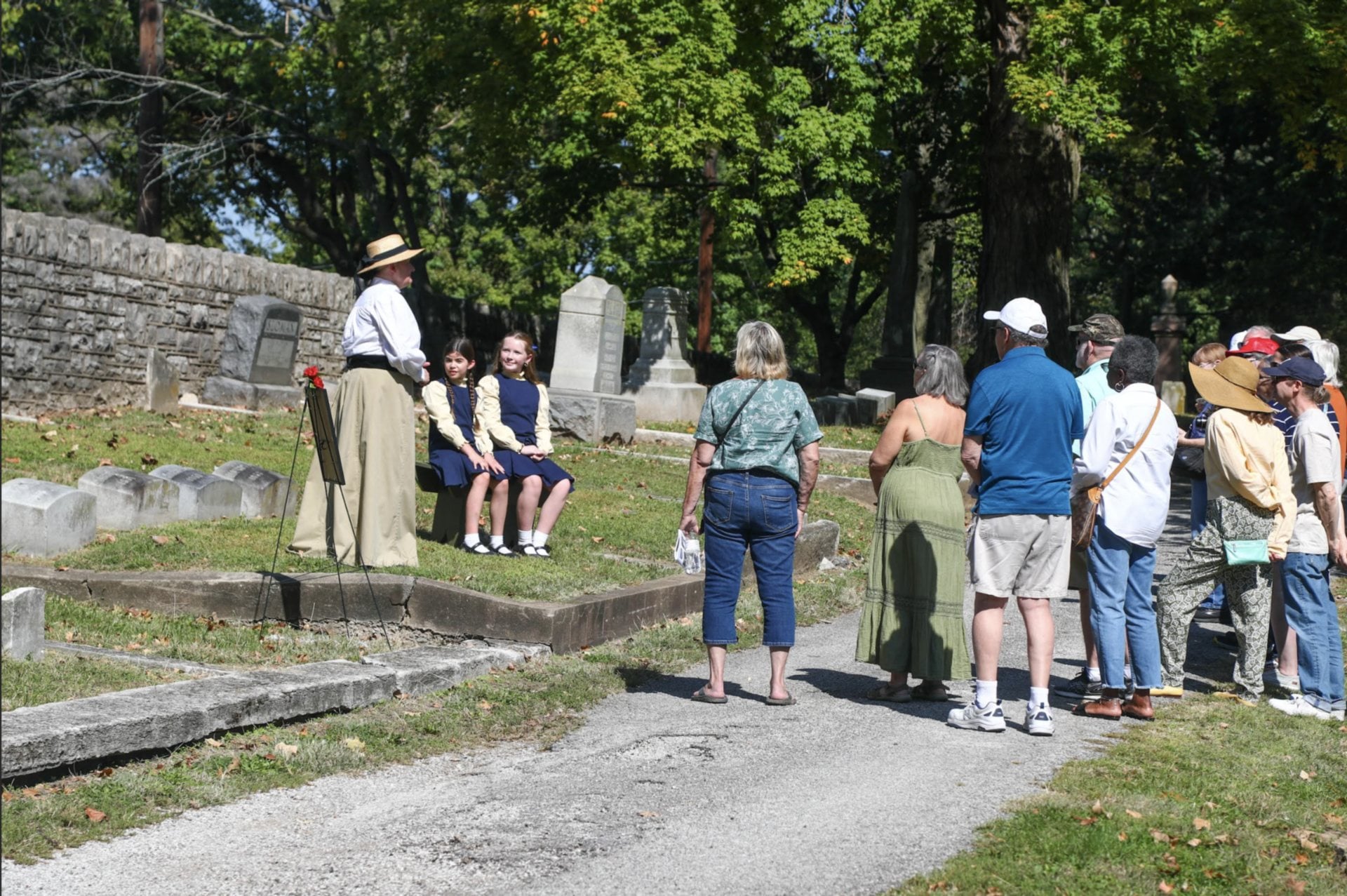
The Vintage Voices tours take attendees through Alton City Cemetery, where they hear from actors portraying Altonians who are buried in the cemetery. The actors tell stories about the decedents’ lives and deaths, sharing more about Alton and regional history.
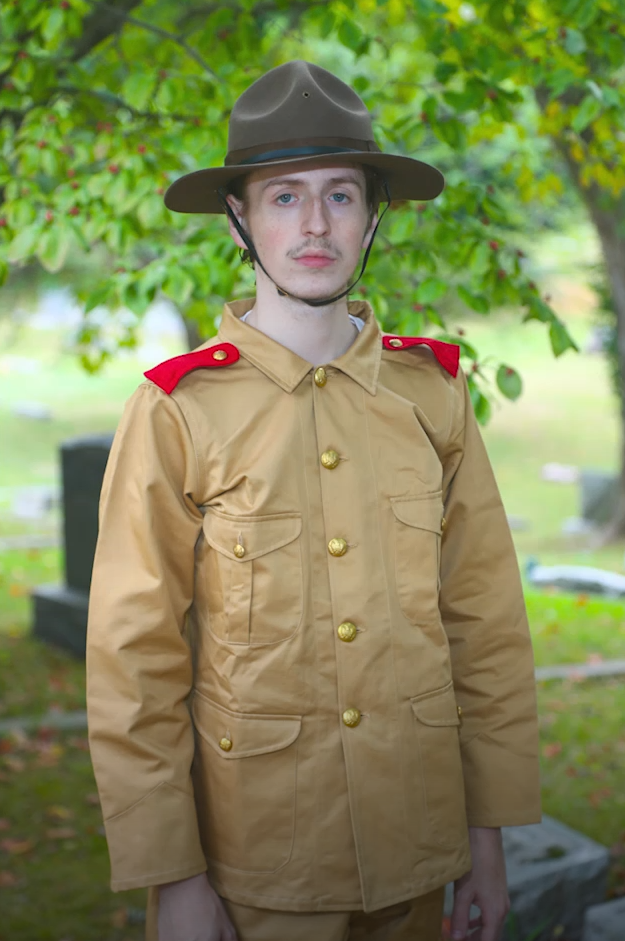
This year’s tours took place earlier in October, but the scripts and videos of the tours are available at The Hayner Public Library District. In the above video, actor Caleb Kelahan tells the story of Cary Langley Waples, a U.S. Army lieutenant born in 1895 who died in 1918.
“On the day of my funeral, it is said that airplanes flew all the way from Scott Kelly Field in San Antonio, Texas, and soared here to Alton City Cemetery, where they hovered right above this spot as my body was entombed here in the Grand View Mausoleum,” begins Waples’s speech.
Waples grew up in Alton and graduated from Western Military Academy in June 1913. He worked at the Bowman and Job Farms in East Alton, where over 250,000 horses were brought in on trains from the mid and western U.S.
The horses needed to be offloaded from trains every 36 hours for feed, water and rest. From the East Alton Stockyards, the horses were shipped to Europe so the British, French and Belgian militaries could use them during World War I.
“These horses were the driving force behind all that was happening in the Great War. They were the animal of conveyance for everything,” Waples shared. “We did our best to help the horses on the farm. But the horses that were in battle were subject to extreme conditions, with the average life expectancy for horses on the frontline being only just about 30 days.”
Horses died on sunken ships, starved, and were shot in battle. Some “even drowned in the mud” while transporting artillery.
“These horses suffered every bit as much as us soldiers did,” Waples said.
After a few years of taking care of the horses in East Alton, Waples enlisted in June 1917 and was sent to Kelly Field in San Antonio, Texas, where he was quickly commissioned as a lieutenant.
He soon eloped with Vera Calhoun. When his mother found out, she held a party at the family home in Alton to celebrate.
But tragedy struck. A month after his marriage, Waples was on “a routine flight” when the airplane’s wing brushed against a tree and the plane nosedived. He was so badly burned that his body could not be viewed.
Waples’s body and Vera were flown to Alton, where he was interred in the Grand View Mausoleum at Alton City Cemetery. His parents held a funeral at First Presbyterian Church in Alton, where they had been married.
“My new wife, Vera, was just devastated at my passing at the young age of 23,” Waples said. “In her grief, she decided to stay and make her home in Alton, the one place she felt she would always be able to remember my life and honor my legacy.”
While this was the end of Waples’s story, the history of the East Alton Stockyards and the horses in World War I continue to live on. The Vintage Voices committee was eager to share Waples’s legacy with community members, and they thanked Kelahan for his portrayal.
For more information about Vintage Voices, visit their official Facebook page.
More like this: