
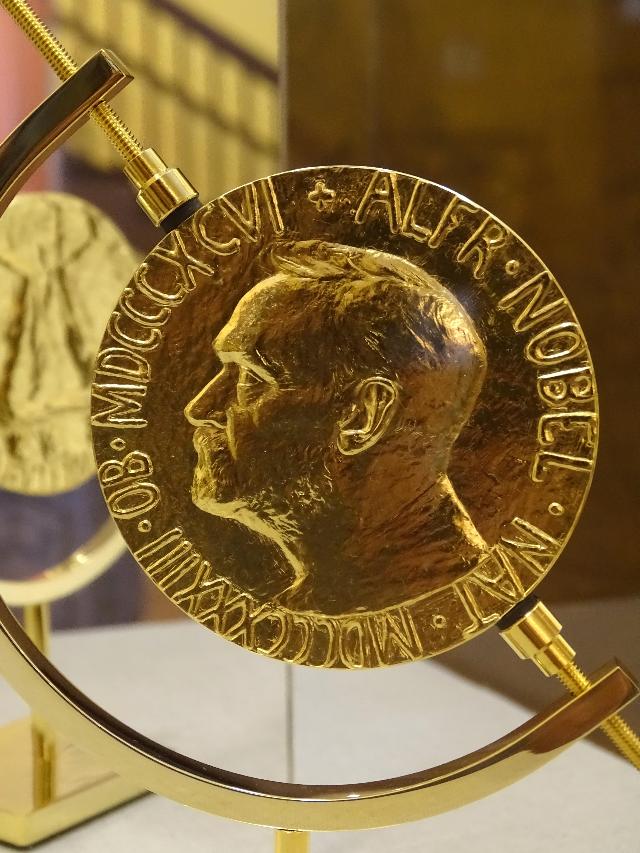
December 10th has long stood as a day marked by profound global significance.
Get The Latest News!
Don't miss our top stories and need-to-know news everyday in your inbox.
Arguably the most impactful event commemorated on December 10th is the awarding of the Nobel Peace Prize. Established by the will of Alfred Nobel, the Nobel Peace Prize has been presented annually on this date since 1901, honoring individuals and organizations that have made outstanding contributions to world peace. This tradition not only celebrates remarkable achievements but also serves as a beacon of hope and a call to action in times of conflict and unrest.
On December 10, 1901, the very first Nobel Peace Prize was awarded to Henri Dunant, the founder of the International Committee of the Red Cross, and Frédéric Passy, a leading international pacifist. Dunant’s efforts in humanitarian aid and Passy’s advocacy for peace set the tone for future laureates who have included figures such as Martin Luther King Jr., Mother Teresa, and Malala Yousafzai. The ceremony itself, held annually in Oslo, Norway, draws global attention to ongoing struggles and triumphs for peace worldwide.
Moving back in time, December 10, 1869, was another pivotal day, particularly for the United States. On this date, the Wyoming Territory became the first region in the country to grant women the right to vote. This groundbreaking move marked a significant step toward gender equality and inspired the broader suffrage movement that would eventually culminate in the 19th Amendment to the U.S. Constitution. Wyoming’s bold legislation laid the foundation for women’s political participation, a right that millions now exercise worldwide.
December 10 has also been a day of significant geopolitical developments. In 1936, King Edward VIII of the United Kingdom signed the Instrument of Abdication, effectively stepping down from the throne to marry Wallis Simpson, an American divorcée. This unprecedented abdication sent shockwaves through the British monarchy and had lasting ramifications on the line of succession and royal traditions.
December 10 has also been a date of cultural celebration. For example, in 1948, the United Nations General Assembly adopted the Universal Declaration of Human Rights, a milestone document asserting fundamental human rights to be universally protected. This declaration has since served as the foundation for international human rights law and continues to inspire activists and governments alike.
Looking at December 10 through a global lens reveals a tapestry rich with achievements, challenges, and transformative moments.