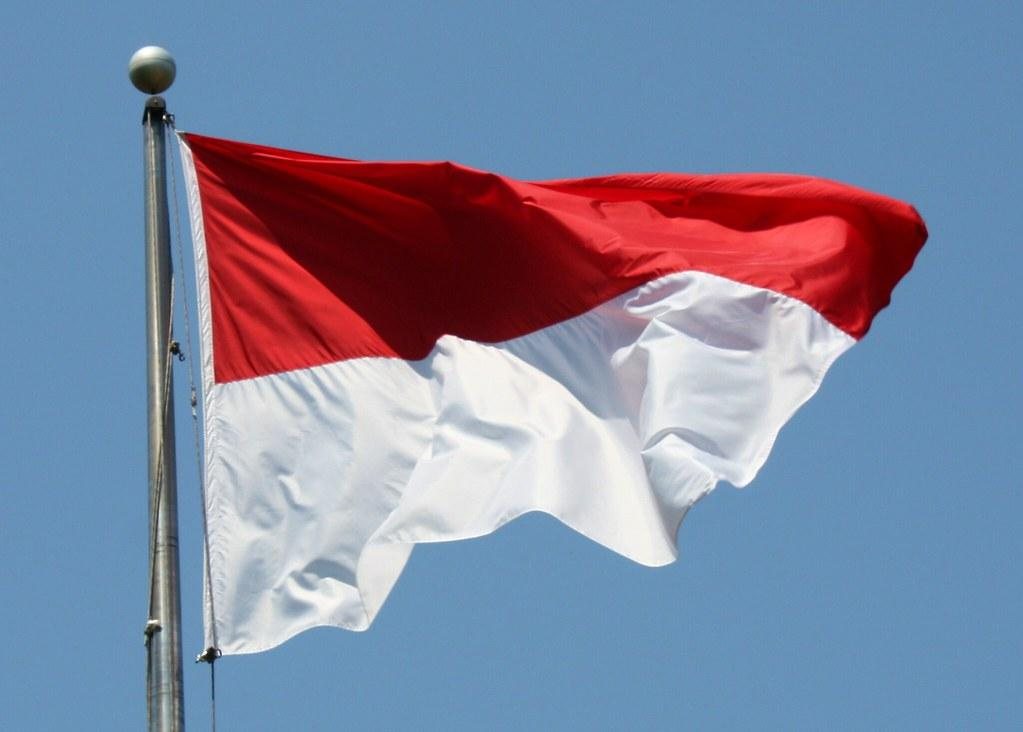
On August 17, the event with the widest and most lasting global impact is the beginning of Indonesian independence in 1945. On that day, Sukarno and Mohammad Hatta proclaimed that Indonesia was free from colonial rule, just days after Japan’s surrender in the Second World War. At the time, the declaration did not end conflict right away; it began a difficult struggle against returning Dutch control. Even so, it mattered immediately because it gave millions of people across a vast archipelago a shared political identity. It still matters today because Indonesia became one of the world’s largest independent nations, and its independence was part of a broader wave of decolonization that reshaped Asia, Africa, and the modern international order.
Get The Latest News!
Don't miss our top stories and need-to-know news everyday in your inbox.
The proclamation came at a moment of uncertainty. For centuries, much of what is now Indonesia had been controlled by the Dutch, and during the war the islands were occupied by Japan. When Japan surrendered in August 1945, local leaders moved quickly before colonial power could be reimposed. Sukarno read the short declaration in Jakarta, stating that the transfer of power would be handled carefully and as quickly as possible. In the years that followed, fighting, negotiations, and international pressure pushed the Dutch to recognize Indonesian sovereignty. The date is remembered not only as a national turning point, but also as a clear sign that European empires could no longer assume they would return unchanged after the war.
More than four centuries earlier, August 17, 1585 marked another major shift in world history with the conclusion of the Siege of Antwerp during the Eighty Years’ War. Spanish forces captured the important commercial city after a long campaign, and the fall of Antwerp weakened one of Europe’s great trading centers. Many merchants and skilled workers left for the northern Dutch provinces, especially Amsterdam. That movement helped change the balance of economic power in northwestern Europe. In simple terms, a military defeat in one city helped build the conditions for the later rise of the Dutch Republic as a major commercial and maritime power.
A different kind of political turning point came in 1807, when Robert Fulton’s steamboat began regular service on the Hudson River between New York City and Albany. Steam power had been tested before, but Fulton’s success showed that the technology could be commercially useful. Rivers and coastal routes became more reliable because travel no longer depended entirely on wind or current. This mattered in the United States, but the larger significance was global: practical steam transport helped speed the 19th-century transformation of trade, travel, and industry.
By the late 19th century, August 17 had become linked with one of the most important social milestones in modern Europe. In 1896, Bridget Driscoll became the first pedestrian known to be killed in a motor vehicle collision in Britain. The event took place in London at a time when automobiles were still new and often treated as curiosities. Her death was a warning that new technology could outpace public safety rules. Over time, road design, traffic law, driver licensing, and vehicle standards developed partly in response to tragedies like this one. It was an early sign that innovation often brings risks alongside convenience.
The date also holds a major landmark from 1915, when Jewish American engineer Leo Frank was lynched in Georgia after his murder conviction had been commuted. Although this was not a scientific event, it was a social and legal milestone with deep historical importance. Frank’s case exposed intense prejudice, public anger, and weakness in due process. It contributed to later debate about fair trials, mob violence, and civil rights in the United States. His death also became part of the history of Jewish civil rights organizing and anti-lynching activism. The significance of the event lies in how it revealed the dangers of injustice carried out both inside and outside formal legal systems.
In 1978, the first successful crossing of the Atlantic by balloon ended when Double Eagle II landed in France. Ballooning had long captured the public imagination, but crossing the ocean had defeated many earlier attempts. The flight showed the value of patience, weather planning, and improved equipment. While it did not transform transportation in the way steamships or airplanes did, it stood as a memorable feat of human endurance and technical skill.
Culture and media also shaped August 17 in lasting ways. In 1969, the Woodstock music festival continued in New York during one of the most discussed weekends in popular culture. Though it had started earlier, August 17 was one of its key days, marked by performances, crowds, logistical strain, and a powerful image of youth culture at the end of the 1960s. Woodstock became larger than a concert. It came to represent the ambitions and contradictions of the era: idealism, protest, commercial entertainment, and the challenge of turning cultural energy into lasting social change.
A very different media moment arrived in 1998, when U.S. President Bill Clinton gave televised testimony related to the Monica Lewinsky investigation and publicly acknowledged an improper relationship. The event drew enormous attention at the time because it combined law, politics, and mass media in a highly visible way. Its long-term importance lies less in the personal scandal itself than in what it showed about modern public life: leaders were increasingly judged in real time through 24-hour news coverage, legal inquiry, and televised messaging. It was an early example of how media saturation could shape political events across borders, as audiences around the world followed the story.
Notable births on August 17 reflect the range of human achievement. In 1601, Pierre de Fermat was born in France. He became one of the foundational figures in mathematics, helping shape number theory, analytic geometry, and probability. His name is known even outside mathematics because of Fermat’s Last Theorem, a problem that challenged scholars for centuries.
The date also marks the 1786 birth of Davy Crockett, an American frontiersman, soldier, and politician whose life became part of national folklore. Behind the legend was a real public figure involved in debates about expansion, government, and identity in the early United States.
In 1887, Marcus Garvey was born in Jamaica. He became one of the most influential Black political organizers of the 20th century, advocating economic self-reliance, racial pride, and global connections among people of African descent. His ideas reached far beyond the Caribbean and shaped political and cultural movements in many countries.
Another major cultural figure arrived in 1943, when Robert De Niro was born in New York City. Through films across several decades, he became one of the most recognized actors of modern cinema. His work helped define styles of screen acting associated with realism, intensity, and character depth.
Among sports figures, Thierry Henry, born in 1977 in France, stands out as one of football’s most admired forwards. His club success and role in France’s international victories made him a global sports figure and an example of the game’s international reach.
Notable deaths on this date also span very different worlds. In 1987, Rudolf Hess died in Berlin after decades in prison following the Second World War. As a senior Nazi official, he was part of one of history’s most destructive regimes. His death marked the end of a direct personal link to the leadership circle around Adolf Hitler, while his legacy remains tied to dictatorship, war, and crimes of the Nazi state.
In 2016, Arthur Hiller died, remembered as a film director whose work included Love Story and a long career in North American cinema. He also played an important role in film institutions, helping shape the professional world of directing beyond his own productions.
Taken together, the events of August 17 show how history moves through declarations, inventions, cultural moments, struggles for justice, and individual lives.