This Day in History: November 14, 2026
On November 14, 1971, NASA’s Mariner 9 became the first spacecraft to orbit another planet. Its arrival at Mars changed planetary exploration: instead of collecting a few pictures during a brief flyby, scientists could study a neighboring world over many months. The mission revealed enormous volcanoes, deep canyons, and evidence that water had once shaped the Martian surface. Those findings helped turn Mars from a distant point of light into a world with a history scientists could investigate—and laid groundwork for the orbiters and rovers exploring it today.
November 14 also connects developments in government, literature, broadcasting, civil rights, and spaceflight. Looking back from 2026, its anniversaries show how discovery and social change often unfold alongside conflict and uncertainty.
Get The Latest News!
Don't miss our top stories and need-to-know news everyday in your inbox.
Major Historical Events
1851: Moby-Dick reaches American readers
Herman Melville’s Moby-Dick; or, The Whale was published in the United States on November 14, following a British edition issued the previous month. Drawing partly on Melville’s experience at sea, the novel followed Captain Ahab’s pursuit of a white whale while exploring obsession, authority, faith, and humanity’s relationship with nature.
Its reputation grew slowly. Neither a major commercial success nor universally praised during Melville’s lifetime, it gained new attention in the twentieth century and became an influential work of American literature.
1889: Nellie Bly begins her journey around the world
Journalist Nellie Bly left Hoboken, New Jersey, seeking to beat the fictional journey described in Jules Verne’s Around the World in Eighty Days. Traveling largely alone by steamship and train, she completed the trip in just over 72 days.
Newspaper coverage made her journey an international media event. It demonstrated the reach of modern transportation while challenging assumptions about women’s ability to travel independently. Bly was already known for investigative reporting, including her undercover account of conditions in a psychiatric institution.
1918: Czechoslovakia establishes a republican government
As Austria-Hungary broke apart after World War I, Czechoslovakia’s Revolutionary National Assembly met on November 14, rejected Habsburg rule, and elected Tomáš Garrigue Masaryk president. Independence had been proclaimed in Prague on October 28; the assembly now gave the new state a republican political framework.
The country brought together territories with Czech, Slovak, German, Hungarian, Ruthenian, and other communities. Building shared institutions while managing competing national interests became a central challenge of its interwar history.
1922: The BBC begins regular broadcasting
The British Broadcasting Company began its regular radio service from London’s 2LO station. Created by radio manufacturers, the company preceded the British Broadcasting Corporation, which was established under a royal charter in 1927.
Radio brought news, music, and spoken entertainment into homes with unprecedented immediacy. The BBC’s development helped shape the idea of public-service broadcasting, while its expanding services eventually connected audiences far beyond Britain.
1940: Coventry suffers a major air raid
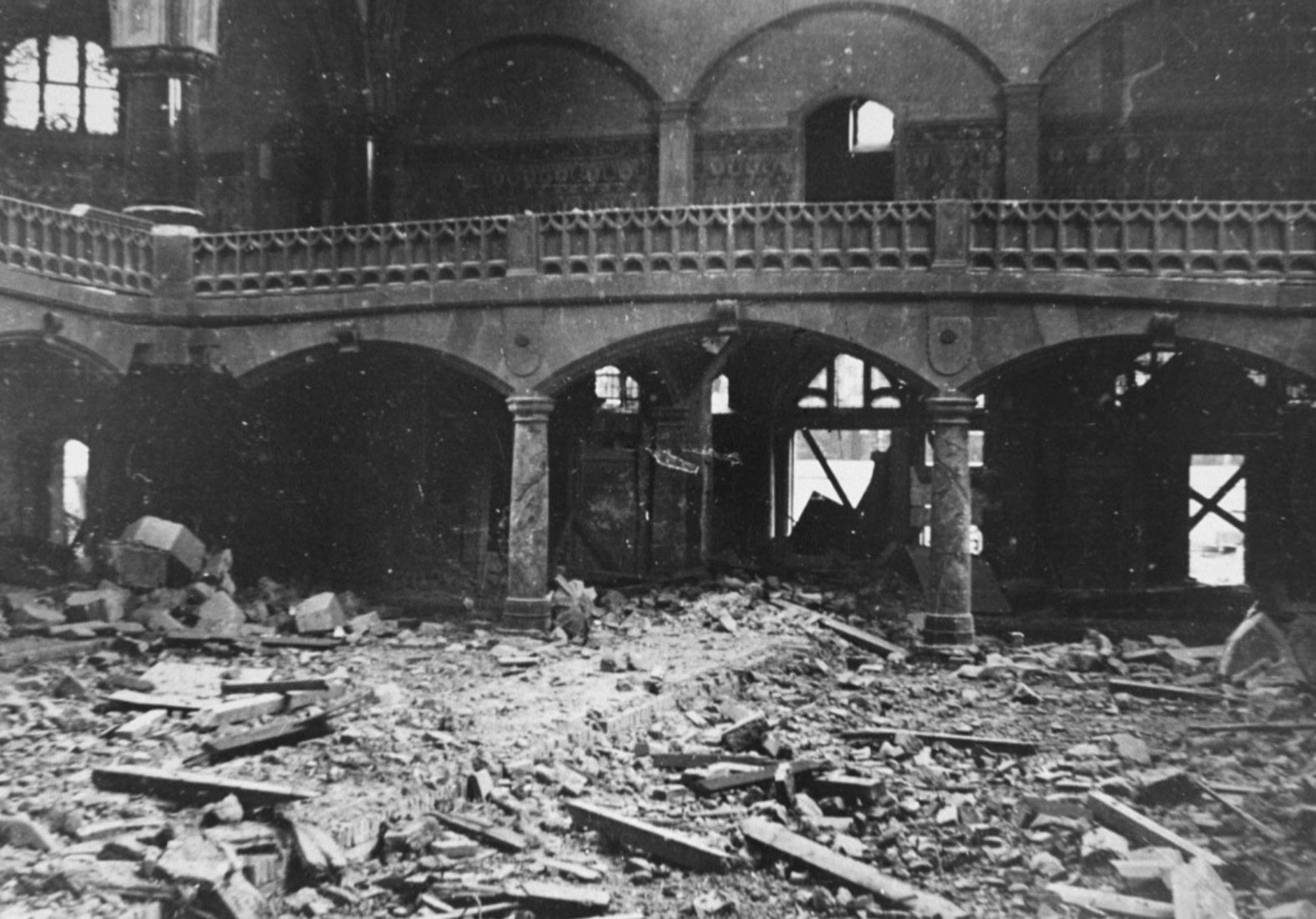
During World War II, Germany’s Luftwaffe launched a concentrated nighttime attack on Coventry, an English manufacturing city involved in wartime production. The bombing continued into November 15, killing hundreds of people and devastating homes, factories, and the medieval cathedral.
The raid illustrated the destructive effects of aerial warfare on cities and civilians. Coventry’s later rebuilding, including a new cathedral beside the old ruins, also became associated with remembrance and reconciliation.
1960: Ruby Bridges enters an all-white school
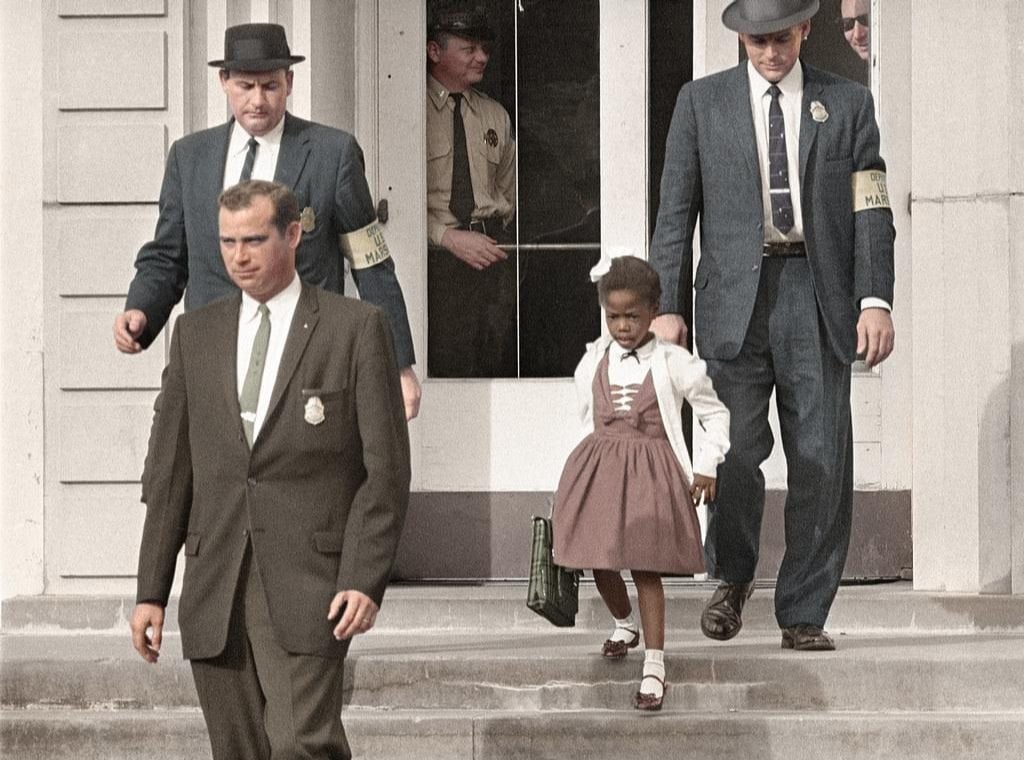
Six-year-old Ruby Bridges entered William Frantz Elementary School in New Orleans under the protection of federal marshals. She was one of four Black girls who began integrating two previously all-white public elementary schools in the city that day.
Their attendance followed court orders enforcing school desegregation after the Supreme Court’s 1954 Brown v. Board of Education decision. Hostile crowds and resistance from many white parents showed the gap between a legal ruling and its implementation. Bridges became a widely recognized figure in the history of American civil rights.
1969: Apollo 12 launches toward the Moon
Apollo 12 lifted off from Florida with astronauts Charles “Pete” Conrad, Richard Gordon, and Alan Bean aboard. Lightning struck the launch vehicle shortly after liftoff, disrupting electrical systems, but the crew and flight controllers restored critical readings and continued the mission.
Conrad and Bean later made the second crewed lunar landing. Their accurate touchdown near the earlier Surveyor 3 spacecraft demonstrated the precision needed for more demanding lunar exploration.
1971: Mariner 9 enters orbit around Mars
The milestone highlighted above initially presented an obstacle: a vast dust storm obscured much of Mars when Mariner 9 arrived. Unlike a flyby spacecraft, however, the orbiter could wait for conditions to improve.
Over its mission, Mariner 9 returned more than 7,000 images and mapped most of the planet. Its observations revealed a far more varied landscape than earlier close-up photographs had suggested, changing scientific understanding of Mars.
1975: Spain signs the Madrid Accords
Spain, Morocco, and Mauritania signed an agreement concerning Western Sahara as Spain prepared to end its colonial administration. The territory’s future was contested, including by the Polisario Front, which sought independence.
Spain withdrew in 1976, but the agreement did not produce a lasting settlement or resolve the territory’s international legal status. Mauritania later abandoned its claim, while Morocco came to control most of the territory. Western Sahara remained a long-running issue of diplomacy and self-determination.
Notable Births
Claude Monet — 1840
Born in Paris, Claude Monet became a leading figure in Impressionism. His paintings explored changing light, weather, and color, often returning repeatedly to the same subject. Works such as his water-lily series helped expand ideas about what painting could convey.
Jawaharlal Nehru — 1889
Jawaharlal Nehru was born in Allahabad, British India, now Prayagraj. A leader of the Indian independence movement, he became independent India’s first prime minister in 1947. He helped shape its parliamentary institutions, economic planning, and nonaligned foreign policy.
Frederick Banting — 1891
Canadian physician Frederick Banting helped develop insulin as a treatment for diabetes, working with Charles Best, J. J. R. Macleod, and James Collip. The breakthrough transformed a frequently fatal disease into one that could be managed. His birthday is observed as World Diabetes Day.
Notable Deaths
Georg Wilhelm Friedrich Hegel — 1831
German philosopher Hegel died in Berlin. His writings on history, logic, freedom, and society influenced later philosophical traditions, including thinkers who strongly disagreed with his conclusions.
Booker T. Washington — 1915
Educator Booker T. Washington died in Tuskegee, Alabama. As a founder and longtime leader of Tuskegee Institute, he expanded educational opportunities for Black Americans. His emphasis on vocational education and economic advancement made him influential, while his approach to segregation prompted debate among other Black leaders.
Manuel de Falla — 1946
Spanish composer Manuel de Falla died in Argentina. Drawing on Spanish musical traditions, he created works including El amor brujo and The Three-Cornered Hat, helping bring Spanish concert music to international audiences.
Across these anniversaries, November 14 links efforts to understand distant worlds, build institutions, create art, and widen opportunity.