Major Historical Events
On November 15, 1884, representatives of 14 countries gathered in Berlin for a conference that helped establish the rules European powers used to claim territory in Africa. No African representatives took part. The Berlin Conference did not draw every colonial border, but it accelerated a struggle for territory that transformed the continent. Its consequences included foreign rule, economic exploitation, resistance, and boundaries that continued to shape African states after independence.
Hosted by German Chancellor Otto von Bismarck, the conference continued until February 1885. Participants addressed trade in the Congo basin, navigation on major rivers, and the conditions under which colonial claims would receive international recognition. European expansion was already underway, but the agreements encouraged governments to establish control on the ground. The meeting remains important for understanding both the growth of colonial empires and the political geography that followed their collapse.
Get The Latest News!
Don't miss our top stories and need-to-know news everyday in your inbox.
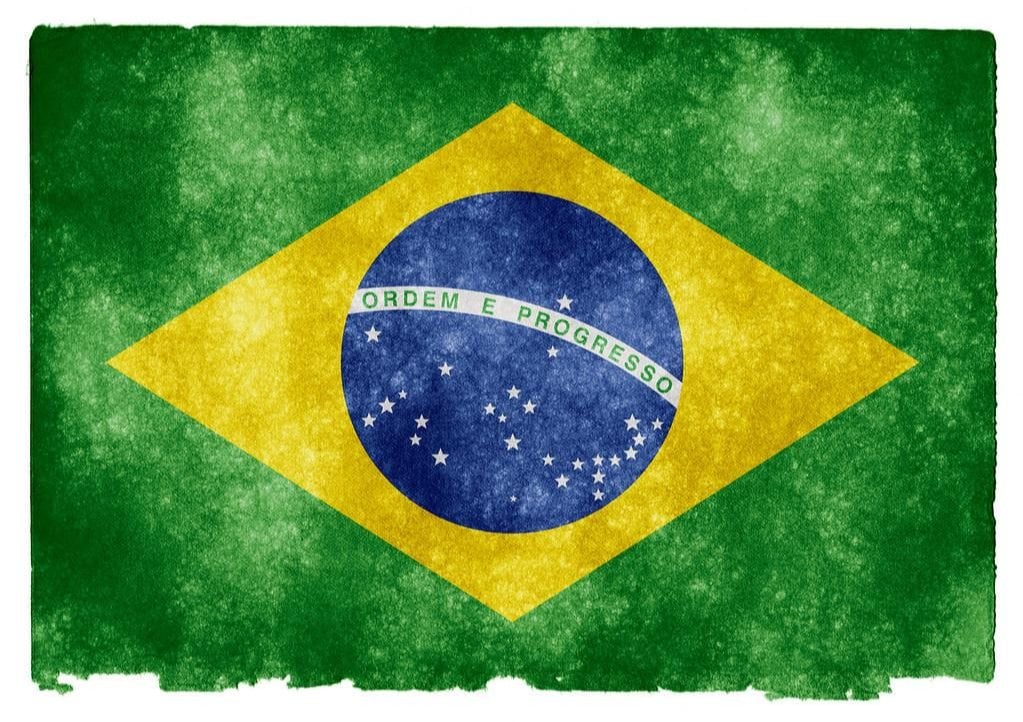
1889: Brazil becomes a republic
Five years later, a military movement removed Emperor Pedro II and ended Brazil’s monarchy. Marshal Deodoro da Fonseca became head of the provisional government, and the imperial family went into exile.
The monarchy had lost support among influential military officers and other groups. The abolition of slavery in 1888, without compensation to slaveholders, had also alienated some landowners. Establishing a republic changed Brazil’s institutions, but it did not immediately create broad political participation: power remained concentrated among military leaders and regional elites.
1920: The League of Nations Assembly meets
Geneva hosted the first meeting of the League of Nations Assembly on November 15, 1920. Created after World War I, the League offered countries a permanent forum for settling disputes and organizing cooperation.
Its work extended beyond diplomacy to refugees, public health, and labor conditions. However, the United States never joined, and the League lacked reliable means to stop aggression by powerful states. Its failures helped inform the design of the United Nations, while several of its humanitarian activities established lasting models for international cooperation.
1922: A general strike ends in bloodshed in Ecuador
In Guayaquil, Ecuador, soldiers fired on people during a general strike rooted in rising living costs and difficult working conditions. Railway workers and other groups had joined a widening labor movement that brought much of the port city to a halt.
The number killed remains disputed, with estimates varying widely. The repression became a defining event in Ecuador’s labor history, remembered through public commemorations and literature. It also exposed the deep tensions surrounding wages, political representation, and the country’s export-driven economy.
1926: NBC begins broadcasting
Across the United States, listeners tuned in to the inaugural broadcast of the National Broadcasting Company. NBC linked stations through telephone lines, allowing audiences in different cities to hear the same programs.
Radio networks helped make entertainment, news, advertising, and major public events shared national experiences. They also concentrated influence over programming in a small number of organizations. The network model later became central to television and helped establish the commercial broadcasting industry.
1971: Intel advertises the 4004 microprocessor
An advertisement in Electronic News introduced the Intel 4004 to a wider commercial audience. Developed initially for a Japanese calculator project, the four-bit chip is widely recognized as the first commercially available programmable microprocessor.
Its importance lay in placing a computer’s central processing functions on a single integrated circuit. The 4004 was modest by later standards, but it demonstrated an approach that helped make computing smaller and more affordable. Microprocessors eventually became essential components of personal computers, vehicles, industrial equipment, and household devices.
1988: A Palestinian declaration and a Soviet spaceflight
Meeting in Algiers, the Palestine National Council proclaimed the establishment of the State of Palestine. The declaration came during the First Intifada, an uprising against Israeli occupation of the West Bank and Gaza Strip.
Numerous countries subsequently recognized Palestine. The declaration did not establish sovereign control over the claimed territory, however, and questions concerning borders, security, refugees, and Jerusalem remained unresolved. It became an important reference point in Palestinian diplomacy and later international debates over statehood.
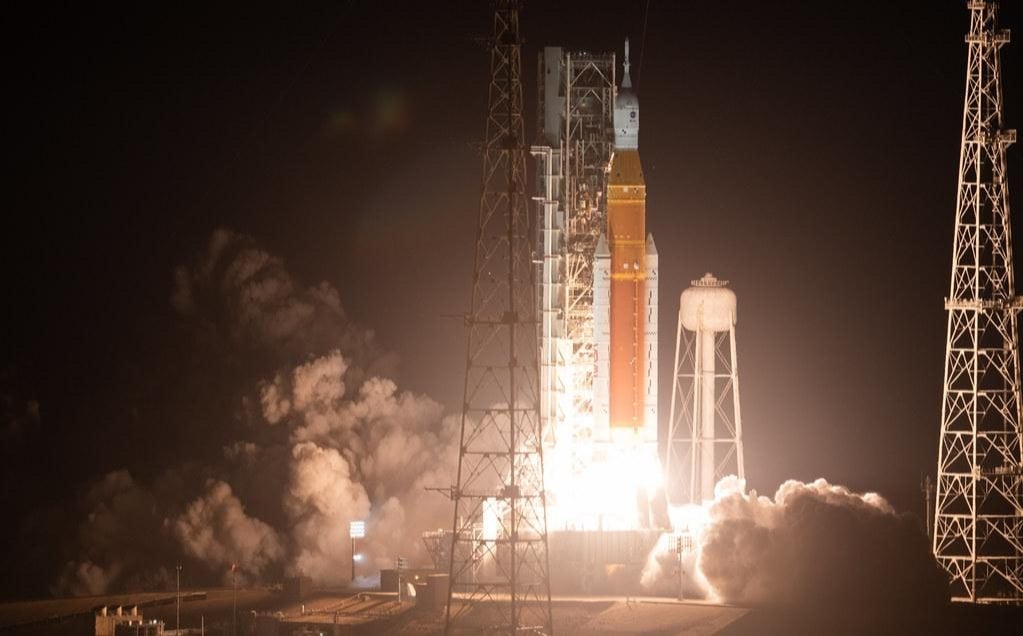
That same day, the Soviet spacecraft Buran completed its first and only orbital flight. Launched without a crew, it circled Earth twice and landed automatically.
Although it resembled the American space shuttle, Buran used a different launch system and demonstrated sophisticated automated flight capabilities. Financial pressures and the dissolution of the Soviet Union prevented further missions. The flight remains a significant achievement in spacecraft engineering.
1989: Sachin Tendulkar makes his international debut
At age 16, Sachin Tendulkar began his Test cricket career for India against Pakistan in Karachi. His debut introduced a player who would become one of the sport’s most accomplished batters.
During a career lasting until 2013, Tendulkar set records for international runs and centuries. His popularity extended well beyond cricket grounds, reflecting the sport’s growing cultural and commercial importance, especially in South Asia.
2020: Fifteen countries sign a major Asian trade agreement
The Regional Comprehensive Economic Partnership was signed by the ten members of the Association of Southeast Asian Nations, together with Australia, China, Japan, New Zealand, and South Korea.
Years of negotiations produced an agreement covering trade, investment, and common rules for goods moving through regional supply chains. Its members represented roughly 30 percent of the world’s population and economic output at signing. The agreement illustrated the growing importance of regional trade arrangements, although many tariff reductions were scheduled to take place gradually.
Notable Births
Born in Hanover on November 15, 1738, William Herschel became a musician and astronomer whose observations expanded humanity’s view of the universe. He discovered Uranus in 1781 and later identified infrared radiation. His collaboration with his sister, Caroline Herschel, also contributed to systematic astronomical observation.
American artist Georgia O’Keeffe, born in 1887, developed a distinctive visual language through enlarged flowers, architectural forms, and Southwestern landscapes. Her long career helped establish modern art in the United States while resisting easy classification within a single movement.
The conductor and pianist Daniel Barenboim was born in Buenos Aires in 1942. Alongside his international musical career, he co-founded the West-Eastern Divan Orchestra with Edward Said, bringing together musicians from Israel, Arab countries, and elsewhere.
Sania Mirza, born in Mumbai in 1986, became a leading figure in Indian tennis. A former world number one in women’s doubles and a winner of six Grand Slam doubles titles, she widened the visibility of Indian women in international professional sport.
Notable Deaths
Johannes Kepler died on November 15, 1630. His laws of planetary motion showed that planets travel in elliptical orbits and described how their motion changes. These discoveries helped provide the foundation for Isaac Newton’s later explanation of gravity.
French sociologist Émile Durkheim died in 1917. Through studies of religion, social bonds, and suicide, he helped establish sociology as a distinct field concerned with how institutions and shared beliefs shape human behavior.
Anthropologist Margaret Mead died in 1978. Her research and widely read books encouraged public discussion about culture, childhood, and social expectations. Some interpretations of her fieldwork remain debated, but her influence on anthropology and public understanding of cultural differences was substantial.
November 15 brings together decisions that reshaped countries, technologies that changed daily life, and people who expanded artistic and scientific possibilities.