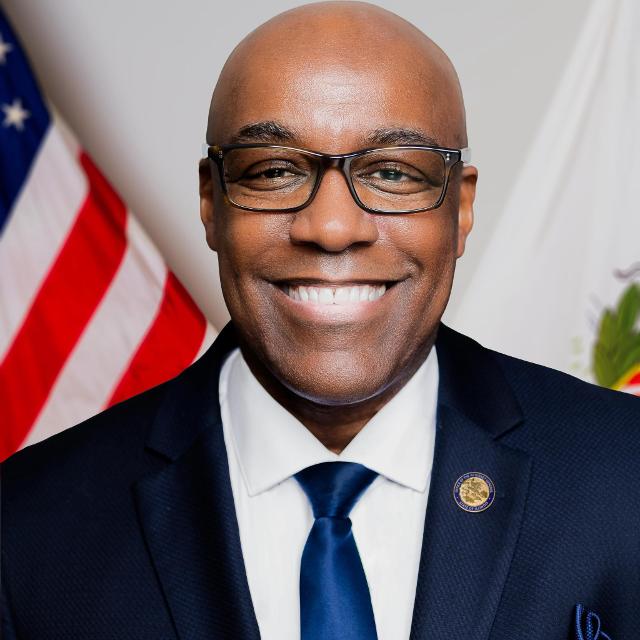
 CHICAGO – Attorney General Kwame Raoul, as part of a bipartisan coalition of 49 attorneys general, is pushing the Federal Communications Commission (FCC) to make improvements to its Robocall Mitigation Database (RMD), which would help curb illegal robocalls.
“Robocalls are a continued nuisance to nearly every American, costing time, money and violating consumers’ privacy,” Raoul said. “While the FCC’s progress has supported state efforts to address the problem, more must be done to keep bad actors from accessing the networks they need to place these illegal calls.”
Get The Latest News!
Don't miss our top stories and need-to-know news everyday in your inbox.
The RMD is intended to serve as a database of approved or legitimate voice service providers. Voice service providers are required to submit a filing with the RMD before they can accept and route call traffic through the U.S. communications network. That filing must include information about the provider’s business and robocall mitigation practices. Downstream providers are only allowed to accept calls from providers that are included in the RMD. If bad actors are submitting filings into the RMD with no meaningful oversight as to their accuracy, then the RMD does not accomplish its goal of helping to curb illegal robocalls.
In response to the FCC’s proposed changes to the RMD, Raoul and the coalition submitted comments on Monday urging the FCC to improve the RMD’s effectiveness by strengthening filing obligations and deterring bad actors and noncompliant providers from appearing in the RMD. Raoul and the coalition argue that improvements could allow the RMD to serve as the authoritative resource for promoting transparency and accountability around all providers’ robocall mitigation practices. Improvements would allow the FCC’s tool to serve as a barrier to entry, reducing illegal call traffic.
In addition to what the FCC is already doing, Raoul and the attorneys general urge it to:
- Ensure that all information in the RMD is accurate and complete. The FCC should thoroughly vet all information submitted to the RMD before allowing a provider to appear in the RMD and start sending call traffic through the network.
- Require additional disclosures. The FCC should require providers to disclose their use of third parties, related entities, the legitimacy of claims of a domestic presence and access to numbering resources.
- Make it more difficult for bad actors to enter or reenter the RMD. The attorneys general support the FCC’s proposed methods to suspend or remove bad actors from the RMD, strengthen the filing format and content of robocall mitigation plans, and require RMD filers to provide evidence of solvency.
- Hold providers responsible for all filings done on their behalf. Raoul and the coalition do not oppose allowing for third-party submissions on behalf of providers to the RMD, as long as providers and their principals are responsible for the information submitted on their behalf.
- Impose additional certification requirements to allow for quicker removal from the RMD when necessary. Providers should be required to certify that they have not submitted false or misleading information, are in compliance with all applicable FCC robocall rules and will respond within 24 hours to traceback requests.
- Require providers to notify their upstream customers and downstream providers of FCC orders and notices. The FCC should require providers subject to an FCC removal order, suspension or mandatory blocking order to notify their calling customers. It should further allow the downstream providers of such voice service providers to also notify those same customers that their calls will be blocked if they continue to attempt to send their call traffic through the provider that was issued an FCC order.
- Make historical RMD filings public. The historical data of providers that have been removed from the RMD would be useful to law enforcement and others.
- Implement all proposed rules as soon as possible and maintain RMD obligations in the meantime. If the proposals to strengthen the RMD are adopted, the RMD is set to become a reliable tool to help safeguard the communications network against illegal robocalls, making swift implementation crucial. The FCC should also keep in place all obligations that protect against bad actors until reinforced guardrails are implemented.
Attorney General Raoul is part of the Anti-Robocall Multistate Litigation Task Force, which launched Operation Robocall Roundup in 2025.
In Phase 1 of the operation, the task force sent warning letters to 37 smaller voice providers that were disregarding their obligations to mitigate the origination and transmission of illegal and/or suspicious robocalls by failing to comply with certain baseline FCC mandates. Just two weeks ago, the FCC ordered six of those companies to fix their robocall protection issues or risk losing the ability to route any calls across the U.S. telephone network.
In Phase 2, the task force expanded its crackdown to four of the country’s largest intermediate voice service providers. In July, the task force called on the FCC to strengthen its “Know Your Customer” rules to require phone companies to verify who is making calls using their networks and the kinds of business their customers are conducting. Also in July, the task force sent comments to the FCC, encouraging it to crack down on illegal robocalls by strengthening rules that would cut off scammers’ access to legitimate phone numbers.
Attorney General Raoul is joined in signing this letter by the attorneys general of Alabama, Alaska, American Samoa, Arizona, Arkansas, California, Colorado, Delaware, the District of Columbia, Georgia, Hawaii, Idaho, Indiana, Iowa, Kansas, Kentucky, Louisiana, Maine, Maryland, Massachusetts, Michigan, Minnesota, Mississippi, Missouri, Nebraska, Nevada, New Hampshire, New Mexico, New York, North Carolina, North Dakota, Ohio, Oklahoma, Oregon, Pennsylvania, Rhode Island, South Carolina, South Dakota, Tennessee, the U.S. Virgin Islands, Utah, Vermont, Virginia, Washington, West Virginia, Wisconsin and Wyoming.