 This Day in Sports History: September 1
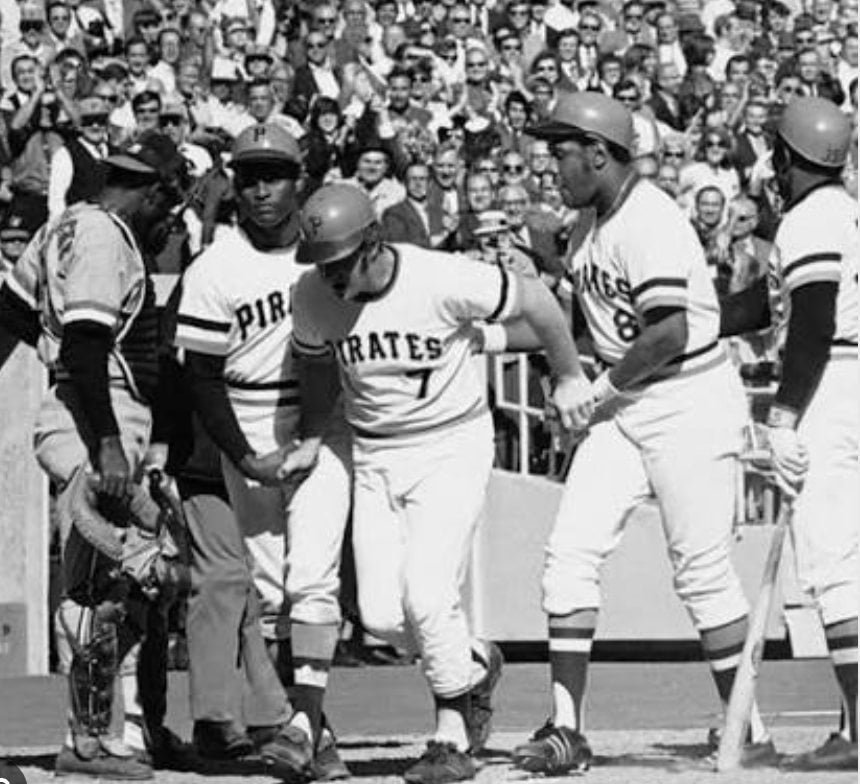
September 1 holds one of baseball’s most important integration milestones. On this date in 1971, the Pittsburgh Pirates sent Major League Baseball’s first all-Black and Latino starting lineup onto the field against the Philadelphia Phillies. The Pirates won 10-7, but the score was secondary to a moment that reflected how far the sport had moved since Jackie Robinson broke the color barrier only 24 years earlier. The lineup was assembled as a baseball decision, not a ceremony, which made its place in history even more striking.
The date’s story begins much earlier, in 1893, when Willie Auchterlonie won The Open Championship at Prestwick in Scotland. The 21-year-old St. Andrews professional finished at 322, two strokes ahead of amateur John Laidlay. It was the first Open played over 72 holes at Prestwick, a format change that helped signal the championship’s continued growth into a more demanding test. Auchterlonie’s victory remained his only major title, but it put him among the young champions who helped carry golf into a new era as the game’s leading events became more structured and internationally recognized.
Get The Latest News!
Don't miss our top stories and need-to-know news everyday in your inbox.
On Sept. 1, 1946, Patty Berg completed a landmark win for women’s golf. Berg defeated Betty Jameson, 5 and 4, in the 36-hole final at Spokane Country Club to claim the inaugural U.S. Women’s Open. The event was conducted by the Women’s Professional Golfers Association and remains unusual in the championship’s history because it was the only U.S. Women’s Open decided by match play. Berg had also earned medalist honors in qualifying with rounds of 72 and 73. Her victory gave a young professional game a major championship of its own. The tournament later came under LPGA and then USGA stewardship, becoming one of the most important titles in women’s golf.
Baseball crossed another significant international threshold on Sept. 1, 1964, when left-handed reliever Masanori Murakami made his major league debut for the San Francisco Giants at Shea Stadium. Murakami, a 20-year-old from Japan, pitched a scoreless eighth inning in a 4-1 loss to the New York Mets and struck out two hitters. He was the first Japanese-born player to appear in the major leagues. Murakami had arrived through a player-exchange arrangement involving the Giants and Japan’s Nankai Hawks, and his stay in the United States lasted only two seasons. Still, his debut created an early bridge between Japanese professional baseball and MLB, decades before stars such as Hideo Nomo, Ichiro Suzuki and Shohei Ohtani reshaped the sport’s international reach.

Seven years later came the defining Sept. 1 event. Pirates manager Danny Murtaugh started Rennie Stennett, Gene Clines, Roberto Clemente, Willie Stargell, Manny Sanguillén, Dave Cash, Al Oliver, Jackie Hernández and Dock Ellis against Philadelphia at Three Rivers Stadium. The group included African American players and players from Puerto Rico, Panama and Cuba. Pittsburgh’s 10-7 victory featured two RBIs apiece from Clemente, Stargell and Sanguillén, while Sanguillén’s two-run homer in the second inning gave the Pirates the lead for good.
The history of the lineup was not widely recognized in the moment. Players did not necessarily realize its significance until the game was underway, and Pittsburgh’s newspapers were on strike. But its meaning has grown with time. The Pirates’ starting nine showed the depth of talent that integration had made available to the sport and illustrated the organization’s long record of signing and developing players of color. The season ended with Pittsburgh defeating the Baltimore Orioles in seven games in the World Series. Clemente was named Series MVP, becoming the first Latin American player to receive that honor.
On Sept. 1, 1972, Bobby Fischer became the 11th world chess champion by defeating defending champion Boris Spassky in Reykjavik, Iceland. Spassky resigned the adjourned 21st game, giving Fischer a 12 1/2-8 1/2 match victory. The result ended 24 years of uninterrupted Soviet control of the world title. Fischer, an American, was 29, and the match drew extraordinary attention well beyond regular chess followers because it unfolded during the Cold War. The Fischer-Spassky contest became known as the Match of the Century, turning chess into front-page news and bringing a surge of new interest to clubs, books and tournament play in the United States and elsewhere.
Soccer entered a technological turning point on Sept. 1, 2016. FIFA conducted its first official “semi-live” test of video assistant referees during France’s 3-1 friendly victory over Italy in Bari, Italy. A video team worked from a remote operations room and communicated with the on-field officials, while the referee remained the sole decision-maker. The test was one step in a process that included further trials, training and eventual approval for widespread use. VAR has since become a major part of elite soccer, used to review such decisive issues as goals, penalty incidents, red cards and mistaken identity. Its arrival has also kept alive a continuing debate about accuracy, consistency and the proper pace of the game.
On Sept. 1, 2019, Justin Verlander added another chapter to an already remarkable pitching career. The Houston Astros right-hander threw a 2-0 no-hitter against the Toronto Blue Jays at Rogers Centre, striking out 14 and walking only Cavan Biggio, the second hitter of the game. Verlander needed 120 pitches to complete his third career no-hitter and his second in Toronto. Abraham Toro’s two-run homer in the ninth inning supplied Houston’s only runs.
With that performance, Verlander joined Larry Corcoran, Cy Young, Bob Feller, Sandy Koufax and Nolan Ryan as pitchers with at least three no-hitters. He also became the eighth pitcher to throw no-hitters for two different clubs, having recorded his first two with the Detroit Tigers. The achievement underscored the durability and dominance of a pitcher whose career spanned generations of hitters, teams and changing approaches to the game. Across more than a century, Sept. 1 has delivered moments that expanded opportunities, altered competition and reminded fans that history can be made in a single afternoon or evening.