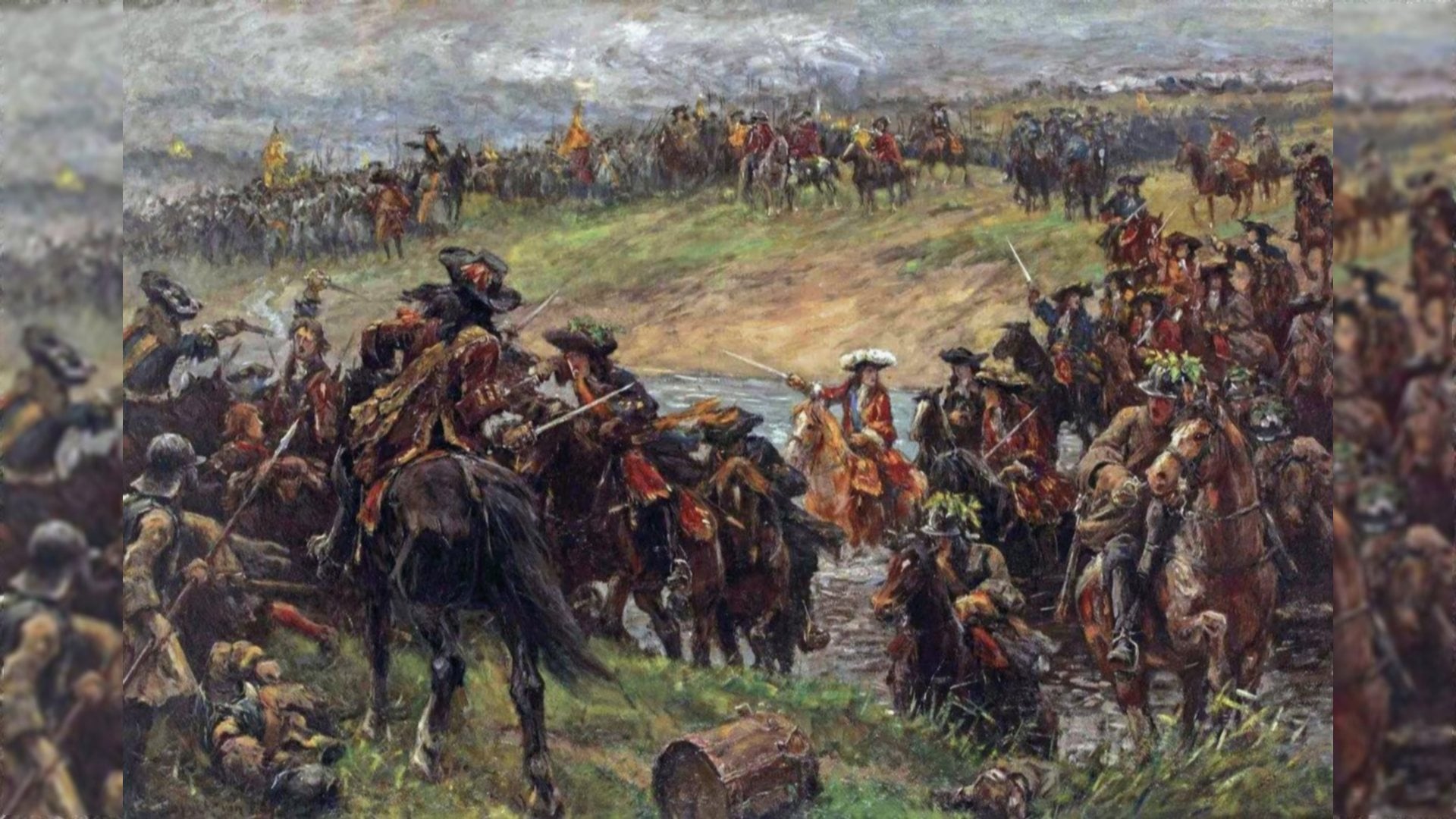
On July 15, 1410, one of medieval Europe’s most important battles reshaped the balance of power in the region. At the Battle of Grunwald, also known as Tannenberg, the allied forces of the Kingdom of Poland and the Grand Duchy of Lithuania defeated the Teutonic Order, a powerful military and religious state that had dominated parts of the Baltic region for generations. The victory mattered immediately because it weakened a major regional power and changed relations among the kingdoms and peoples of eastern and central Europe. It still matters today because it marked a turning point in the history of Poland, Lithuania, Prussia, and neighboring lands, and it remains a symbol of political change, military strategy, and shifting alliances in Europe.
Get The Latest News!
Don't miss our top stories and need-to-know news everyday in your inbox.
The road to Grunwald was shaped by years of rivalry. The Teutonic Order had expanded through crusading wars and political control around the Baltic Sea, often clashing with Poland and Lithuania. By the early 1400s, tensions over territory and influence had grown into open conflict. When the two allied armies met on July 15, the battle became one of the largest in medieval Europe. The defeat of the Teutonic Knights did not destroy the Order at once, but it sharply reduced its prestige and military strength. Over time, that decline opened the way for new political arrangements in the region and strengthened the long-term position of the Polish-Lithuanian union.
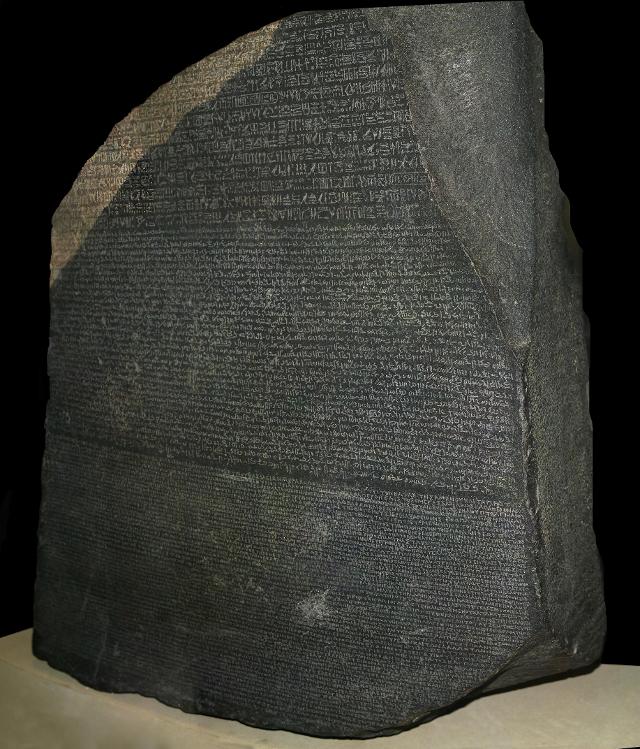
More than three centuries later, this date became associated with another major shift in power. On July 15, 1799, French soldiers in Egypt discovered the Rosetta Stone near the town of Rosetta, now Rashid. At first, it was simply an important artifact found during Napoleon’s campaign. Its true significance became clear later, because the stone carried the same text in three scripts: Greek, Demotic, and Egyptian hieroglyphs. That made it possible, after years of study, for scholars including Jean-François Champollion to unlock the reading of ancient Egyptian writing. The find transformed the study of ancient Egypt and gave historians a much clearer view of one of the world’s great early civilizations.
A different kind of moment came on July 15, 1834, when the Spanish Inquisition was formally abolished. Created centuries earlier to enforce religious conformity, the institution had become associated with trials, punishment, censorship, and fear. Its end reflected broader changes sweeping Europe, where older systems of authority were increasingly challenged by liberal reforms and new ideas about law and governance. Although the Inquisition’s influence had already faded, its official abolition marked the closing chapter of a long and controversial institution whose history still shapes discussions about religion, state power, and civil rights.
Science and technology also claim an important place on this date. On July 15, 1916, William Boeing founded the company that would become the Boeing Company in Seattle. At the time, aviation was still young, with aircraft mostly used for experimentation, training, and war. Over the next century, Boeing became one of the most influential names in aerospace, helping shape commercial air travel, military aviation, and space technology. The company’s history reflects a wider story of the 20th century: the rapid movement from fragile early airplanes to a world connected by flight.
That same date in 1918 marked the beginning of the Second Battle of the Marne during the First World War. Germany launched what would be its final major offensive on the Western Front. The attack was part of a larger effort to break Allied lines before American forces could fully tip the balance. Instead, the battle became a turning point in the opposite direction. French, British, American, and other Allied troops held their ground and then counterattacked. The failure of the offensive weakened Germany’s position and helped set the stage for the final Allied advance that ended the war later that year.
Culture and media were also changing on this day. On July 15, 1958, the Recording Industry Association of America awarded the first official gold record album, recognizing the soundtrack to Oklahoma! This was a small but meaningful moment in entertainment history. It showed how recorded music was becoming a mass commercial industry with new ways of measuring popularity and success. The music business would continue to evolve through radio, vinyl, television, cassettes, compact discs, and digital streaming, but systems of certification began helping define the modern idea of a hit.
The space age reached a dramatic milestone on July 15, 1975, when the Apollo-Soyuz Test Project began with the launch of an American Apollo spacecraft. A Soviet Soyuz mission was launched the same day, and the two spacecraft later docked in orbit. The mission was important not because it ended Cold War competition, but because it showed that rival superpowers could cooperate in space. Engineers and astronauts on both sides developed compatible systems and procedures, creating a model for later joint projects. In many ways, this mission pointed forward to the kind of international cooperation seen on space stations in later decades.
Several notable people were born on July 15 and left lasting marks in very different fields. Rembrandt van Rijn, born in 1606 in the Dutch Republic, became one of the most influential painters in European art. He is remembered for his portraits, self-portraits, biblical scenes, and mastery of light and shadow. His work helped shape later painting by bringing unusual emotional depth to familiar subjects.
July 15 also marks the deaths of several important historical figures. Anton Chekhov died on this date in 1904. The Russian writer and playwright transformed the short story and modern drama through works that focused on ordinary lives, quiet disappointment, and subtle emotional tension. His influence reached far beyond Russian literature and remains central to theater and fiction around the world.
A more widely recognized loss came in 1997 with the death of Gianni Versace. The Italian fashion designer built a global brand known for bold color, theatrical design, and the blending of luxury fashion with celebrity culture. His work helped define the look of late 20th-century fashion and changed how designers, media, and popular culture interacted.
What ties July 15 together is the way one date can hold battlefield turning points, breakthroughs in knowledge, moments of diplomacy, artistic influence, and human achievement across many fields.