
July 8 has brought together moments of power, discovery, creativity, and change across many parts of the world. In 1497, Vasco da Gama set sail from Lisbon on the voyage that would eventually carry him around the Cape of Good Hope to India. This journey opened a direct sea route between Europe and South Asia. For Portugal, it was a major commercial and strategic success, helping it build a far-reaching maritime empire. The voyage also changed world trade by linking regions more directly by sea, though it came with lasting consequences for local societies as European colonial influence expanded.
Get The Latest News!
Don't miss our top stories and need-to-know news everyday in your inbox.
Science and technology also have an important place on this date. In 1889, the first issue of The Wall Street Journal was published in New York. Though it began as a financial newspaper, its influence grew far beyond business circles. It helped standardize financial reporting and became one of the world’s most recognized newspapers. Its launch reflected a period when industrial growth, stock markets, and modern journalism were becoming closely connected.
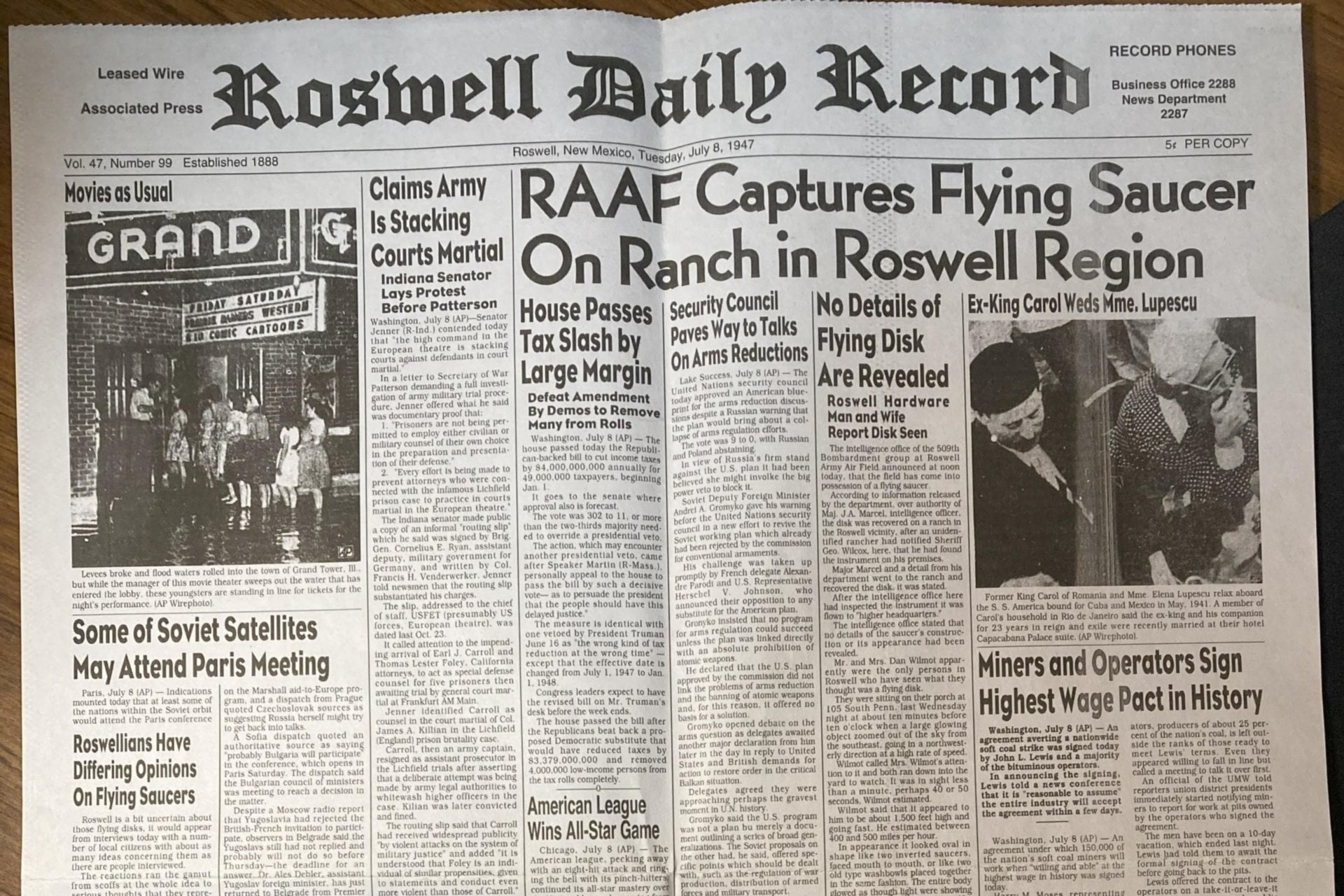
A very different kind of transformation came in 1947, when reports from Roswell, New Mexico, drew public attention after military officials first announced the recovery of a “flying disc,” then retracted the statement and said the object was a weather balloon. The incident itself was local and limited, but its afterlife was enormous. Roswell became one of the most famous episodes in modern popular culture, feeding public interest in unidentified flying objects, government secrecy, and the space age imagination that grew during the Cold War.
Only a few years later, on July 8, 1950, General Douglas MacArthur was named commander of United Nations forces in Korea. The Korean War had just begun after North Korean forces crossed the 38th parallel. The appointment mattered because it turned a regional war into a major international conflict under UN command, with the United States playing the central military role. The war hardened Cold War divisions, reshaped East Asian security, and left the Korean Peninsula divided in a way that still defines the region today.
Another major turning point came in 1960, when Francis Gary Powers was charged with espionage in the Soviet Union after his U-2 spy plane was shot down earlier that year. The case exposed the scale of Cold War surveillance and embarrassed the United States just as leaders were trying to reduce tensions. It also damaged trust between the superpowers, showing how intelligence gathering could disrupt diplomacy even when both sides publicly supported negotiation.
Space exploration entered a new chapter on this date in 2011, when NASA launched the space shuttle Atlantis on STS-135, the final mission of the shuttle program. The shuttle era had begun in 1981 with hopes of making spaceflight more routine. Over three decades, the program carried astronauts, launched satellites, helped build the International Space Station, and suffered devastating losses in the Challenger and Columbia disasters. Atlantis’s final launch symbolized both achievement and transition, closing one period of American human spaceflight and opening another built around international cooperation and, later, commercial spacecraft.

Sports history offers its own memorable chapter. In 2014, Germany defeated Brazil 7–1 in the FIFA World Cup semifinal in Belo Horizonte. The match quickly became one of the most discussed results in football history because of the scale of the defeat and the setting: Brazil was hosting the tournament and carried enormous national expectations. For Germany, it was a display of discipline and efficiency that led toward its eventual World Cup title. For the sport more broadly, the result entered the global memory as an example of how even the strongest teams can collapse under pressure.
Several notable people were born on July 8. John D. Rockefeller, born in 1839, became one of the most important figures in the history of business through the creation of Standard Oil. He helped build a new model of industrial organization and immense private wealth in the United States. At the same time, his business methods sparked major debates about monopoly power, regulation, and the role of large corporations in modern life.
Ferdinand von Zeppelin, born in 1838, gave his name to the rigid airship. His work helped advance early aviation at a time when human flight was still new and experimental. Though airships were eventually overtaken by airplanes for most practical uses, Zeppelin’s designs played an important role in the history of engineering, transport, and military technology.
Kevin Bacon, born in 1958, became a well-known American actor with a long career across film, television, and theater. He is remembered not only for performances in films such as Footloose and Apollo 13, but also for becoming a figure in popular culture through the “Six Degrees of Kevin Bacon” game, which reflected growing public fascination with social and creative networks.
Sourav Ganguly, born in 1972, is one of India’s most influential cricketers. As captain, he helped shape a more confident and competitive Indian team in the early 2000s. His leadership and batting made him a central figure in the modern history of cricket, especially in South Asia, where the sport holds enormous cultural importance.
This date also marks the deaths of several significant historical figures. In 1822, Percy Bysshe Shelley died in a boating accident off the coast of Italy. Shelley was one of the major English Romantic poets, known for works that joined lyrical beauty with political and philosophical thought. His writing influenced later poets and remains widely studied for its language, emotion, and idealism.
Kim Il-sung died on July 8, 1994. He was the founding leader of North Korea and dominated its political system for decades after the country’s establishment in 1948. His rule shaped the institutions, ideology, and dynastic structure that continued after his death. Any account of modern Korean history is incomplete without recognizing his central role in the division and development of the peninsula.
In 2011, Betty Ford died at the age of 93. As First Lady of the United States, she became known for speaking openly about breast cancer, addiction, and women’s rights at a time when public figures often avoided such subjects. Her honesty helped change public discussion around health and recovery, and her later work with addiction treatment extended that influence far beyond her years in the White House.
July 8 brings together voyages that redrew trade routes, artistic works that reached millions, and lives that left lasting marks in business, science, politics, sports, and culture.