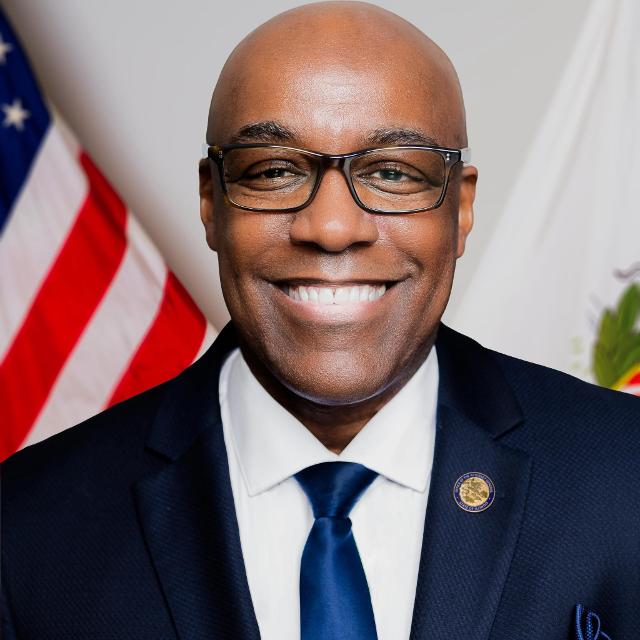

CHICAGO – Attorney General Kwame Raoul today led a coalition of 22 attorneys general in defending a district court’s dismissal of the Trump administration’s lawsuit challenging the Protect Our Courts Act (POCA), a New York law that prohibits civil arrests in state courthouses unless backed by a judicial order, as well as two executive orders that promote public safety in state government buildings.
Get The Latest News!
Don't miss our top stories and need-to-know news everyday in your inbox.
The amicus brief, which Raoul and the coalition filed in the U.S. Court of Appeals for the 2nd Circuit, explains that POCA reflects a historical common-law privilege from civil arrests at state courthouses, which is an arrest of a person to ensure that he or she appears in a civil proceeding, rather than on criminal charges. The brief also states that POCA and the executive orders are commonsense exercises of New York’s sovereign authority to control its property and resources, and that the challenged measures are all lawful.

“All of these measures promote public safety and New York state residents’ access to services they need. They are consistent with steps taken by many states, including Illinois, to ensure our residents can obtain state services safely and free from interference or threat,” Raoul said. “I am proud to lead my colleagues in urging the court to uphold the dismissal of the Trump administration’s lawsuit.”
Raoul and the attorneys general explain in the amicus brief that one purpose of POCA, which New York passed in 2020, is to protect individuals who attend court proceedings, as parties or witnesses, from civil immigration enforcement. The law is built upon two executive orders that limit civil immigration arrests in state facilities and that direct employees to generally refrain from involvement with federal civil immigration enforcement, unless required by law.
In June 2025, the Trump administration filed a lawsuit challenging POCA and the two executive orders, alleging they are preempted by the Immigration and Nationality Act and that they violate principles of intergovernmental immunity. After a district court dismissed the lawsuit in November 2025, the Trump administration appealed that decision.
In their brief, Raoul and the coalition argue that POCA is consistent with long-standing state statutes that prohibit civil arrests in state courthouses to preserve state judicial system functionality, and that the executive orders the law is built upon are consistent with measures taken to limit state officials’ involvement with civil immigration enforcement. The coalition explains that empirical evidence shows that such measures ensure that state residents feel free to participate in court proceedings, cooperate with law enforcement and access basic state services, including education and healthcare. The coalition argues that POCA and the executive orders are constitutional under long-standing principles of federalism, including the basic rule that the federal government cannot require states to assist in enforcing federal law.
Joining Raoul in filing the amicus brief are the attorneys general Arizona, California, Colorado, Connecticut, Delaware, the District of Columbia, Hawaii, Maine, Maryland, Massachusetts, Michigan, Minnesota, Nevada, New Jersey, New Mexico, Oregon, Rhode Island, Vermont, Virginia, Washington and Wisconsin.