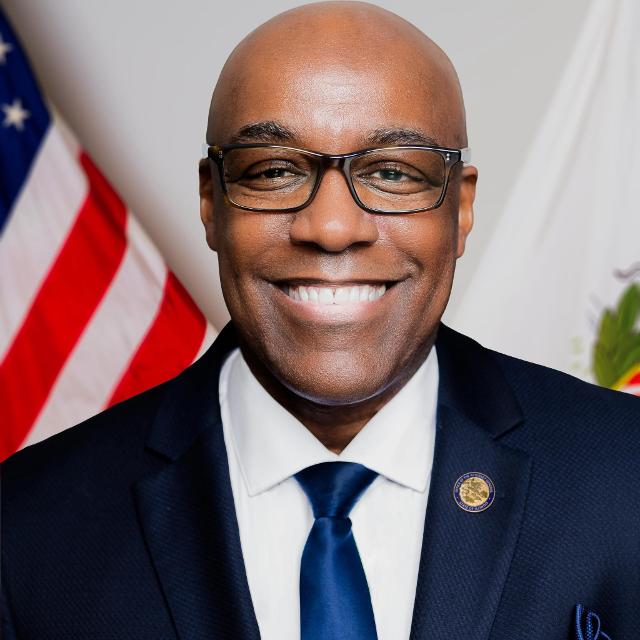
 CHICAGO – Attorney General Kwame Raoul joined a coalition of 22 attorneys general today in sending a letter to the U.S. Department of Agriculture’s (USDA) Acting Associate Administrator for the Supplemental Nutrition Assistance Program (SNAP), demanding clarity and additional information on how USDA plans to proceed after alerting states that funding for critical nutrition programs may lapse in the near future because of the ongoing federal government shutdown.
In their letter, Raoul and the coalition detail the grave harm faced by children, seniors, disabled persons, veterans and other vulnerable individuals who rely on food assistance for their daily meals if the USDA refuses to pay SNAP benefits.
Get The Latest News!
Don't miss our top stories and need-to-know news everyday in your inbox.
“Nearly two million Illinoisans rely on SNAP benefits to obtain nutritional food, supporting local growers, farmers’ markets and, ultimately, the state’s economy,” Raoul said. “The decision by the USDA to cut off access to this vital program is unprecedented and cruel and will cause immediate and unnecessary pain in households throughout the country.”
On Oct. 10, the USDA issued a letter to all state agencies and state agency directors that administer the SNAP program. Their letter indicated that “if the current lapse in appropriations continues, there will be insufficient funds to pay full November SNAP benefits for approximately 42 million individuals across the Nation.” It also “direct[ed] States to hold their November issuance files and delay transmission to State EBT vendors until further notice,” including “on-going SNAP benefits and daily files.”
Without citing any legal authority or providing any reasoning, the USDA prohibited states like Illinois from sending already calculated November allotments to EBT vendors for processing. While the USDA does have some authority to reduce SNAP benefits or suspend or cancel them under certain circumstances, their Oct. 10 letter does not indicate that any of the legal requirements to do so have been met. In addition, the USDA appears to have at least $6 billion in SNAP contingency reserve funds that Congress appropriated for emergency situations like a government shutdown, as well as access to Section 32 funds that could also be used to provide SNAP benefits during the ongoing shutdown.
In their letter, Raoul and the attorneys general argue the federal government should use these contingency and Section 32 funds to continue providing SNAP benefits rather than direct states to suspend already calculated allotments.
Raoul and the attorneys general further argue that if carried out, USDA’s directive will cause significant hardship for the 42 million Americans who depend on SNAP to feed themselves and their families. Even a temporary delay, which now appears inevitable, will have devastating effects on the American public and the national economy. Nearly 40% of SNAP recipients in fiscal year 2023 were children ages 0-17, and 20% were adults ages 60 and older. In Illinois, approximately 1.9 million people receive SNAP benefits to access food.
In their letter, Raoul and the coalition ask the USDA to answer critical questions about their directive, including:
- Does USDA/FNS have contingency funds left over from prior congressional appropriations? If so, what is the total of those contingency funds?
- Does USDA/FNS have access to any other sources of available funds to pay benefits and administrative costs associated with issuing those benefits?
- Does USDA/FNS intend to use such funds to furnish SNAP benefits, even at a reduced level? If not, why not? And if so, how does the agency intend to execute that plan, and when would states be expected to send their benefit issuance files?
- Assuming USDA/FNS has contingency funds, on what grounds did the agency direct states to “hold” November files, rather than reducing allotments consistent with available funds?
- Should states treat the Oct. 10 letter as a “suspension” of benefits or a “cancellation” of benefits under 7 C.F.R. § 271.7, or neither?
Joining Raoul in sending today’s letter are the attorneys general of Arizona, California, Colorado, Connecticut, Delaware, the District of Columbia, Hawaii, Maine, Maryland, Massachusetts, Michigan, Minnesota, Nevada, New Jersey, New Mexico, New York, North Carolina, Oregon, Rhode Island, Vermont, Washington and Wisconsin.